Animal Collisions and Comprehensive Insurance: What You Need to Know

In my experience working with policyholders, comprehensive insurance generates more questions than any other auto coverage. People know they have it — usually because their lender requires it — but they rarely understand what it actually covers until they need to file a claim.
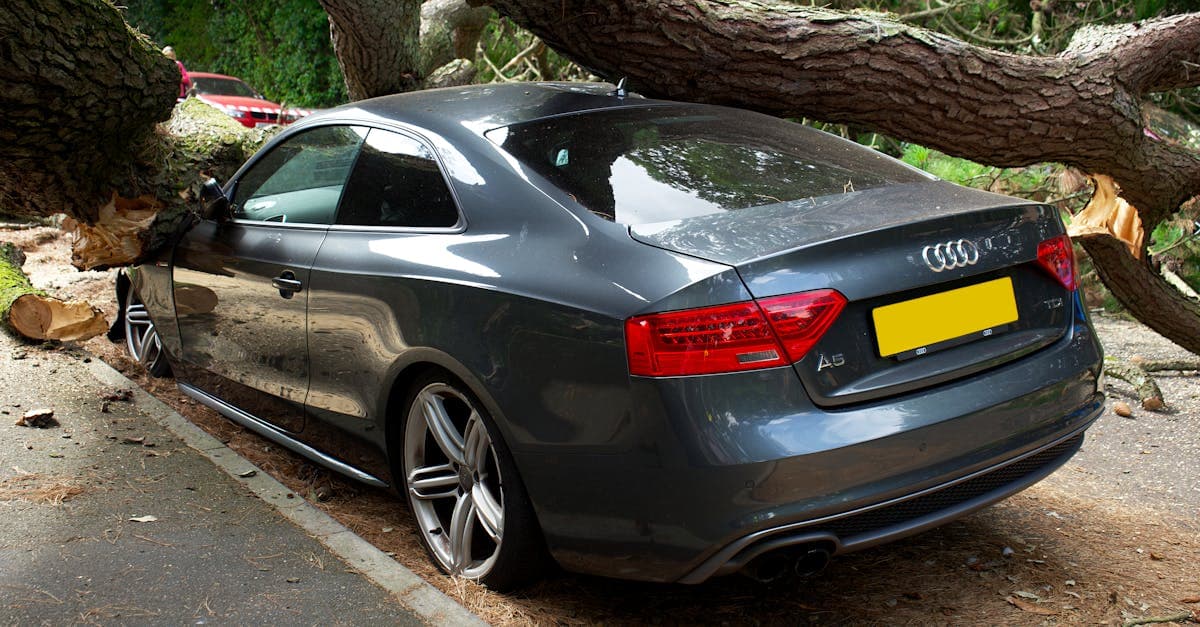
The most common call I receive about comprehensive coverage starts the same way: something happened to my car and I want to know if my insurance covers it. A tree fell on it. Someone keyed it in a parking lot. A rock cracked the windshield. A flash flood submerged it. In most of these cases, the answer is yes — comprehensive covers it. But the details matter enormously.
How much will the insurer pay? That depends on your vehicle's actual cash value, your deductible, and the specific terms of your policy. Will filing a claim raise your rates? Usually less than a collision claim, but it depends on your insurer and your state. Should you file a claim at all, or pay out of pocket? That depends on the damage amount relative to your deductible and your claims history.
These are the real questions about comprehensive insurance — not just what it covers in theory, but how it works in practice. This guide answers all of them, walking through every covered peril, the claims process, cost factors, and the strategic decisions that help you get maximum value from this essential coverage.
When Comprehensive Insurance Is Required
Our investigation revealed something surprising. Unlike liability insurance, comprehensive coverage is not required by state law. However, financial institutions that hold a stake in your vehicle frequently mandate it as a condition of financing or leasing. Understanding these requirements helps you comply without overpaying.
Lender requirements: If you financed your vehicle through a bank, credit union, or dealer financing, your loan agreement almost certainly requires comprehensive coverage for the life of the loan. The lender has a financial interest in the vehicle — if it is stolen or destroyed by a covered event, they want assurance that insurance will pay enough to cover the outstanding loan balance.
Lease requirements: Leased vehicles always require comprehensive coverage because the leasing company owns the vehicle. Lease agreements typically specify maximum deductible amounts — often $500 or $1,000 — that you must maintain throughout the lease term. Exceeding the specified deductible violates your lease agreement.
Force-placed insurance: If you drop comprehensive coverage while your vehicle is financed or leased, the lender will purchase a policy on your behalf and add the cost to your loan payments. Force-placed insurance is significantly more expensive than coverage you purchase yourself and provides minimum protection. Avoiding force-placed insurance by maintaining your own coverage always saves money.
After payoff: Once you own your vehicle outright, the decision to carry comprehensive is entirely yours. No state requires it for registered vehicles. At this point, the decision becomes a financial calculation based on your vehicle's value, your local risks, and your ability to absorb a total loss out of pocket.
Employer requirements: Some employers who provide company vehicles or reimburse employees for business use require comprehensive coverage. Check your employment agreement or vehicle use policy for specific requirements.
Comprehensive Insurance for New Vehicles
The records show a different story. New vehicles represent significant financial investments that warrant careful comprehensive coverage decisions. Whether required by your lender or chosen by you, comprehensive coverage on a new vehicle comes with considerations unique to newer cars.
Lender requirements: Most new vehicle purchases involve financing, and virtually all lenders require comprehensive coverage as a loan condition. You typically cannot choose to skip comprehensive on a financed vehicle. The lender specifies maximum deductible amounts — usually $500 or $1,000 — that you must maintain throughout the loan.
Rapid depreciation risk: New vehicles depreciate fastest in their first two to three years. A vehicle purchased for $35,000 may be worth $25,000 after two years but still have a loan balance of $28,000. Comprehensive coverage pays actual cash value — $25,000 — leaving you $3,000 short of your loan balance. Gap insurance addresses this specific risk and is strongly recommended for new vehicle purchases.
New-car replacement endorsements: Some insurers offer endorsements that replace a totaled new vehicle with a brand-new equivalent rather than paying actual cash value. These endorsements typically apply for the first one to two years of ownership and cost an additional premium. For new vehicles with rapid depreciation, this endorsement can be extremely valuable.
Technology repair costs: New vehicles contain expensive sensors, cameras, computers, and driver assistance systems that increase comprehensive repair costs. A hail-damaged windshield on a vehicle with adaptive cruise control and lane departure sensors may cost $1,500 to replace and recalibrate, compared to $400 for a basic windshield. These higher repair costs make comprehensive coverage particularly important for technology-equipped new vehicles.
Lower deductible justification: For new vehicles, carrying a lower comprehensive deductible is often justified by the higher repair costs and greater financial exposure. The premium difference between a $250 and $500 deductible is modest relative to the vehicle's value and potential claim costs.
Comprehensive Insurance for Classic and Collector Vehicles
Our investigation revealed something surprising. Classic and collector vehicles require a different approach to comprehensive insurance because their value dynamics are the opposite of standard vehicles — they appreciate rather than depreciate. Standard comprehensive policies, which pay actual cash value, often undervalue these vehicles significantly.
The valuation problem: Standard auto policies use actual cash value, which is based on depreciation. A 1969 Mustang that would receive a modest ACV under a standard policy may actually be worth $50,000 or more to collectors. Filing a comprehensive claim under a standard policy would result in a devastating underpayment.
Agreed value policies: Specialty insurers offer agreed value policies where you and the insurer establish the vehicle's value when the policy is written. If a covered comprehensive loss occurs, the insurer pays the agreed value without depreciation — providing far better protection for appreciated vehicles. Getting a professional appraisal supports your agreed value claim.
Specialty insurer advantages: Companies that specialize in classic and collector vehicles understand the unique parts sourcing, restoration techniques, and valuation methods these vehicles require. They often provide coverage features that standard insurers do not, including spare parts coverage, flatbed towing requirements, and restoration coverage during active projects.
Storage and usage restrictions: Classic vehicle policies typically come with usage restrictions such as pleasure use only, no daily commuting, and mandatory enclosed storage. These restrictions reduce the insurer's risk exposure and keep premiums lower. Violating these restrictions can void your coverage, so understanding and following them is essential.
Documentation and provenance: Maintaining thorough documentation of your classic vehicle — including photographs, restoration records, appraisals, and provenance history — strengthens your position in any comprehensive claim. This documentation establishes both the vehicle's value and its condition prior to the loss.
Comprehensive vs Collision: Understanding the Difference
Our investigation revealed something surprising. The distinction between comprehensive and collision insurance is one of the most important concepts in auto coverage. Both protect your vehicle, but they cover fundamentally different types of events — and understanding the difference is fortifying your position against threats you cannot engage directly.
Collision coverage pays when: Your vehicle hits another vehicle, your vehicle hits a stationary object like a pole or guardrail, your vehicle rolls over, your vehicle hits a pothole, or another vehicle hits your vehicle. The common thread is a collision — an impact involving your vehicle while it is in motion or being operated.
Comprehensive coverage pays when: Your vehicle is damaged by weather, theft, vandalism, fire, falling objects, animal strikes, glass breakage, civil unrest, or flooding. The common thread is damage from events outside the act of driving — forces that affect your vehicle regardless of whether it is moving.
The deer test: Insurance professionals often use this example to illustrate the difference. If you swerve to avoid a deer and hit a tree, that is a collision claim — your vehicle struck an object. If you hit the deer itself, that is a comprehensive claim — an animal collision. Same deer, very different coverage classification.
Why the distinction matters financially: Comprehensive claims are generally treated more favorably by insurers because they involve events outside your control. Collision claims, especially those where you are at fault, are viewed as higher risk. This means comprehensive claims tend to have less impact on your future premiums, which should factor into your filing decisions.
Choosing the Right Comprehensive Deductible
The records show a different story. Your comprehensive deductible is the amount you pay out of pocket before the insurer covers the rest of a comprehensive claim. Choosing the right deductible is fortifying your position against threats you cannot engage directly — it directly affects both your premium and your financial exposure when you file a claim.
Common deductible options: Most insurers offer comprehensive deductibles of $100, $250, $500, $1,000, and sometimes $1,500 or $2,500. The default is often $500, but accepting the default without analysis is a missed opportunity to optimize your coverage cost.
The premium-deductible tradeoff: Raising your comprehensive deductible from $250 to $500 typically reduces your comprehensive premium by 15 to 20 percent. Moving from $500 to $1,000 saves another 10 to 15 percent. These savings compound year after year, while the higher deductible only costs you more if you file a claim.
Separate from collision deductible: Your comprehensive and collision deductibles are independent. Many drivers set them at the same level out of habit, but there are good reasons to set them differently. Comprehensive events like hail and theft are more common in some areas than collisions, so a lower comprehensive deductible may make sense if you live in a high-risk area for weather or theft.
The break-even calculation: Compare the annual premium savings from a higher deductible to the additional out-of-pocket cost if you file a claim. If raising your deductible from $250 to $500 saves you $100 per year, and the additional deductible exposure is $250, you break even in 2.5 years without a claim. For most drivers, higher deductibles pay off over time.
Glass deductible considerations: In states with full glass coverage, your comprehensive deductible may not apply to windshield claims. In other states, choosing a lower comprehensive deductible specifically to reduce windshield claim costs may be worthwhile if you drive frequently on roads with loose gravel or debris.
How Comprehensive Insurance Values Your Vehicle
Our investigation revealed something surprising. When you file a comprehensive claim that results in a total loss, the payout is based on your vehicle's actual cash value. Understanding how insurers determine this value prevents surprise and disappointment when you receive your settlement offer.
Actual cash value defined: Actual cash value is what your vehicle was worth immediately before the loss occurred. It is not what you paid for the vehicle, not what you owe on your loan, and not what it would cost to buy a brand-new replacement. It is the fair market value of your specific vehicle with its specific mileage, condition, and features at the time of the loss.
Valuation methods: Insurers typically use one or more valuation services to determine ACV. These services analyze recent sales data for comparable vehicles in your geographic area, adjusting for mileage, condition, optional equipment, and other factors. Common valuation sources include CCC Intelligent Solutions, Mitchell, and Audatex.
Factors that affect ACV: Year, make, model, and trim level establish the baseline. Mileage adjusts the value up or down relative to the average. Condition — including paint, interior, tire, and mechanical condition — further adjusts the figure. Optional equipment, aftermarket modifications, and even regional demand affect the final number.
Challenging the valuation: If you believe the insurer's ACV is too low, gather evidence. Search for comparable vehicles currently listed for sale in your area and compile the listings. Request a copy of the insurer's valuation report to identify specific adjustments you can dispute. Many policyholders successfully negotiate higher valuations by presenting credible comparable sales data.
Replacement cost coverage: Some insurers offer optional new-car replacement or better-car replacement endorsements that pay more than ACV for newer vehicles. These endorsements cost extra but can be valuable for vehicles that depreciate quickly in their first few years.
Hail Damage and Comprehensive Claims
The records show a different story. Hail damage is the single most expensive weather-related comprehensive peril in the United States, costing insurers billions of dollars annually. Understanding how hail claims work helps you navigate the process efficiently and protect your vehicle's value.
Hail damage assessment: Hail creates dents ranging from barely visible to severely deformed depending on hail size and impact angle. Insurance adjusters assess hail damage by counting dents on each panel and categorizing their severity. A typical hail claim identifies damage on the hood, roof, trunk, and exposed side panels.
Paintless dent repair: PDR has become the standard repair method for most hail damage claims. Skilled technicians use specialized tools to push dents out from behind the panel without repainting. PDR is faster, less expensive, and preserves the original factory paint finish. Most insurers prefer PDR when the damage qualifies because it reduces claim costs.
When PDR is not possible: Severe hail that cracks paint, creates sharp creases, or damages panels beyond PDR capability requires traditional body work including filling, sanding, and repainting. These repairs cost significantly more and may affect your vehicle's value even after completion. Broken glass from hail is also included in the comprehensive claim.
Hail claim tips: Document the damage immediately with photographs before moving the vehicle. Get multiple repair estimates — the insurer's preferred shop estimate may not match independent estimates. Understand that you have the right to choose your own repair facility. If you prefer traditional repair over PDR for cosmetic reasons, discuss this with your adjuster.
Storm chasing repair companies: After major hailstorms, out-of-town repair companies often set up temporary operations to handle the surge in claims. While many are legitimate, some provide substandard work. Verify credentials, check reviews, and ensure any repair company offers a warranty before authorizing work on your vehicle.
Making Comprehensive Coverage Work for You
In my experience, the drivers who get the most value from comprehensive insurance are the ones who understand it before they need it. They know their deductible, they know what events are covered, and they have a documentation plan ready to execute if something happens.
The worst time to learn about comprehensive coverage is after a hailstorm has damaged your vehicle and you are scrambling to understand the claims process. The best time is now — before anything happens — when you can review your coverage, adjust your deductible, and prepare a documentation strategy at your own pace.
Take the time to photograph your vehicle thoroughly today. Store those photos somewhere accessible. Review your declarations page and confirm your comprehensive coverage details. These simple preparations take less than thirty minutes and dramatically improve your position if you ever need to file a comprehensive claim.
Your vehicle is one of your most valuable assets. Comprehensive insurance protects it against the events you cannot prevent. Make sure your protection matches your needs.
Continue reading

What Insurance Agents Wish You Knew About Comparing Quotes
Insurance professionals see policyholders make the same comparison mistakes repeatedly. Learning what agents wish consumers understood transforms quote shopping from a price hunt into a value analysis.

Policy Checkup After Getting Married: What Coverage Changes You Need
Marriage affects auto insurance, homeowners coverage, life insurance, and liability protection. Reviewing all your policies after getting married ensures both spouses are properly covered.

AOB Agreements and Your Rights as an Insurance Policyholder
You have the right to accept or refuse an assignment of benefits. Knowing your rights before a contractor asks you to sign helps you maintain control of your insurance claim.