Tree Removal Costs: What Your Homeowners Insurance Covers

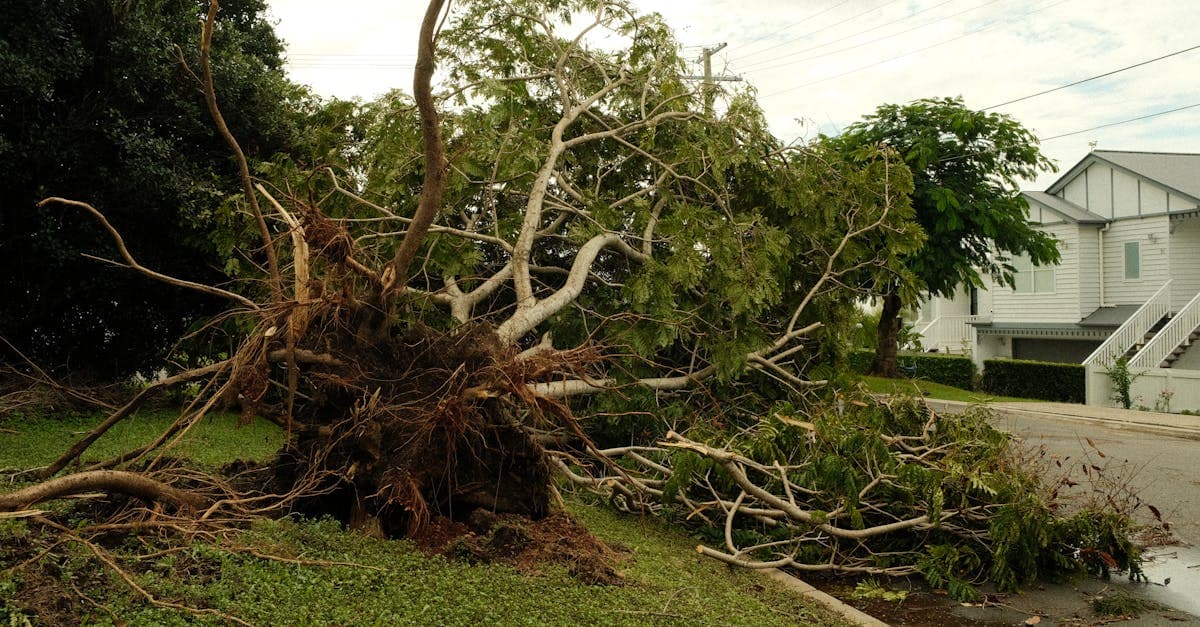
In my experience handling homeowners claims, fallen trees generate more confusion about coverage than almost any other claim type. The confusion stems from the fact that fallen tree coverage involves multiple parts of your policy simultaneously, and each part has its own rules and limits.
The most common source of frustration is tree removal costs. Homeowners are relieved to learn that structural damage from a fallen tree is fully covered, only to discover that the insurer caps tree removal at $500 or $1,000. When the actual removal cost is $3,000 because the tree is wedged into the roof and requires a crane, the gap between coverage and cost creates immediate frustration.
The second most common surprise involves neighbor trees. Homeowners naturally assume that if a neighbor's tree damages their property, the neighbor's insurance should pay. Learning that their own policy handles the claim — and their own deductible applies — feels unfair. But the logic is sound: your policy covers damage to your property from covered perils, and a falling tree is a covered peril regardless of its origin.
Understanding these rules before a tree falls transforms the experience from confusion and frustration into a structured process. You know which coverage applies, you know the limits, and you know what documentation to gather. That preparation is worth more than any amount of after-the-fact explanation.
Tree Root Damage: What Insurance Does Not Cover
Our investigation revealed something surprising. While fallen tree impact damage is clearly covered, damage caused by tree roots presents a very different insurance picture. Root damage is one of the most significant coverage gaps in homeowners insurance for properties with mature trees near structures.
Why root damage is excluded: Homeowners insurance covers sudden and accidental damage. Tree root damage is classified as gradual damage that occurs slowly over months or years. Roots growing into foundations, lifting driveways, crushing sewer lines, and cracking walls all happen gradually, not suddenly. This gradual nature places root damage outside the scope of standard homeowners coverage.
Foundation damage from roots: Tree roots seeking moisture can grow under and around foundations, causing shifting, cracking, and structural movement. This damage can cost tens of thousands of dollars to repair but is excluded from homeowners insurance as gradual earth movement or settling.
Sewer and water line damage: Roots infiltrating sewer pipes and water supply lines cause blockages, breaks, and flooding. While the resulting water damage from a sudden pipe burst might be covered, the root intrusion that caused the pipe failure is not covered. Service line coverage endorsements may provide some protection for underground utility damage.
Driveway and walkway damage: Root growth that lifts, cracks, or displaces driveways, walkways, and patios is gradual damage and not covered. These repairs range from minor resurfacing to complete replacement depending on severity.
Managing root risk: If you have large trees near structures, monitor for signs of root damage including cracks in foundations, uneven floors, sticking doors, and displaced paving. Root barriers installed during construction or landscaping can redirect root growth away from structures. Removing trees whose roots threaten structures is the most definitive solution.
Neighbor's Tree on Your Property: The Liability Rules
Our investigation revealed something surprising. When your neighbor's tree falls on your property, the natural assumption is that your neighbor should pay for the damage. In most situations, that assumption is incorrect. Understanding the actual liability rules prevents conflict with neighbors and helps you file the correct insurance claim.
The general rule: If a healthy tree falls due to a storm or other natural cause, the property where the damage occurs files the claim. Your homeowners insurance covers damage to your structures from a fallen tree regardless of where the tree was rooted. Your deductible applies. Your neighbor is not liable for storm-felled healthy trees.
Why your neighbor is not liable: Storms are classified as acts of nature. Your neighbor did not cause the storm and could not have prevented a healthy tree from falling in extreme wind. Since there is no negligence, there is no liability. This is consistent across most jurisdictions and supported by longstanding case law.
When your neighbor may be liable: The exception involves trees that were known to be dead, diseased, or hazardous. If you notified your neighbor in writing that their tree appeared dead or dangerous and they failed to remove it, they may be liable for damage when it eventually falls. This negligence-based liability requires evidence that the neighbor knew about the hazard and failed to act.
Documentation for neighbor tree situations: If you notice a neighbor's tree that appears dead or hazardous, notify them in writing and keep a copy. Take photographs of the tree's condition. This documentation establishes knowledge if the tree later falls and creates potential liability for the neighbor.
Maintaining neighbor relationships: Even when the insurance rules are clear, tree-related disputes can strain neighbor relationships. Approaching the situation collaboratively rather than accusatorially often leads to better outcomes. Share information about the insurance process and focus on resolving the damage rather than assigning blame.
Tree Damage to Detached Structures
The records show a different story. Detached garages, sheds, workshops, gazebos, and other non-dwelling structures on your property are covered under Coverage B — other structures — when damaged by fallen trees. This coverage has its own limits and rules separate from your dwelling coverage.
Coverage B limits: Other structures coverage is typically ten percent of your dwelling coverage amount. On a $300,000 dwelling, that provides $30,000 for all other structures combined. If you have multiple detached structures and a tree damages several of them, the total claim for all other structures cannot exceed this limit.
What qualifies as other structures: Detached garages, storage sheds, tool sheds, workshops, gazebos, pergolas, pool houses, detached decks, fences, retaining walls, and similar structures all fall under Coverage B. The common requirement is that the structure is detached from your dwelling and located on your property.
Attached vs detached distinction: Structures physically attached to your dwelling — including attached garages, covered porches, and sunrooms — are part of your dwelling coverage, not other structures. This distinction matters because dwelling coverage has higher limits and may have different valuation terms.
Replacement cost vs ACV: Your other structures coverage may use a different valuation method than your dwelling coverage. Check your policy to determine whether detached structures are valued at replacement cost or actual cash value. This affects whether depreciation reduces your settlement.
Business use exclusion: If a detached structure is used for business purposes — such as renting it out or operating a commercial activity — it may be excluded from your homeowners other structures coverage. Business-use structures typically need commercial property insurance or a specific endorsement.
Neighbor's Tree on Your Property: The Liability Rules
Our investigation revealed something surprising. When your neighbor's tree falls on your property, the natural assumption is that your neighbor should pay for the damage. In most situations, that assumption is incorrect. Understanding the actual liability rules prevents conflict with neighbors and helps you file the correct insurance claim.
The general rule: If a healthy tree falls due to a storm or other natural cause, the property where the damage occurs files the claim. Your homeowners insurance covers damage to your structures from a fallen tree regardless of where the tree was rooted. Your deductible applies. Your neighbor is not liable for storm-felled healthy trees.
Why your neighbor is not liable: Storms are classified as acts of nature. Your neighbor did not cause the storm and could not have prevented a healthy tree from falling in extreme wind. Since there is no negligence, there is no liability. This is consistent across most jurisdictions and supported by longstanding case law.
When your neighbor may be liable: The exception involves trees that were known to be dead, diseased, or hazardous. If you notified your neighbor in writing that their tree appeared dead or dangerous and they failed to remove it, they may be liable for damage when it eventually falls. This negligence-based liability requires evidence that the neighbor knew about the hazard and failed to act.
Documentation for neighbor tree situations: If you notice a neighbor's tree that appears dead or hazardous, notify them in writing and keep a copy. Take photographs of the tree's condition. This documentation establishes knowledge if the tree later falls and creates potential liability for the neighbor.
Maintaining neighbor relationships: Even when the insurance rules are clear, tree-related disputes can strain neighbor relationships. Approaching the situation collaboratively rather than accusatorially often leads to better outcomes. Share information about the insurance process and focus on resolving the damage rather than assigning blame.
Tree Damage to Detached Structures
The records show a different story. Detached garages, sheds, workshops, gazebos, and other non-dwelling structures on your property are covered under Coverage B — other structures — when damaged by fallen trees. This coverage has its own limits and rules separate from your dwelling coverage.
Coverage B limits: Other structures coverage is typically ten percent of your dwelling coverage amount. On a $300,000 dwelling, that provides $30,000 for all other structures combined. If you have multiple detached structures and a tree damages several of them, the total claim for all other structures cannot exceed this limit.
What qualifies as other structures: Detached garages, storage sheds, tool sheds, workshops, gazebos, pergolas, pool houses, detached decks, fences, retaining walls, and similar structures all fall under Coverage B. The common requirement is that the structure is detached from your dwelling and located on your property.
Attached vs detached distinction: Structures physically attached to your dwelling — including attached garages, covered porches, and sunrooms — are part of your dwelling coverage, not other structures. This distinction matters because dwelling coverage has higher limits and may have different valuation terms.
Replacement cost vs ACV: Your other structures coverage may use a different valuation method than your dwelling coverage. Check your policy to determine whether detached structures are valued at replacement cost or actual cash value. This affects whether depreciation reduces your settlement.
Business use exclusion: If a detached structure is used for business purposes — such as renting it out or operating a commercial activity — it may be excluded from your homeowners other structures coverage. Business-use structures typically need commercial property insurance or a specific endorsement.
Your Liability When Trees Fall on Others' Property
Our investigation revealed something surprising. When a tree from your property falls onto a neighbor's home, car, or other property, the question of your liability depends on whether you were negligent in maintaining the tree. Understanding these rules protects you both financially and legally.
No liability for healthy trees in storms: If a healthy, well-maintained tree on your property falls during a storm and damages your neighbor's home, you are generally not liable. The storm is the cause of the damage, and storms are acts of nature outside your control. Your neighbor's homeowners insurance covers their damage.
Liability for known hazardous trees: If your tree was dead, severely diseased, or visibly hazardous and you failed to remove it, you may be negligent. If a neighbor notified you in writing that the tree appeared dangerous and you took no action, the evidence of negligence strengthens. In this scenario, your liability coverage under your homeowners policy may need to respond to your neighbor's claim.
How liability coverage works: Your homeowners policy includes personal liability coverage — typically $100,000 to $300,000 — that covers you when you are legally liable for damage to others' property. If your negligence in maintaining a hazardous tree leads to damage, this coverage pays your neighbor's repair costs up to your liability limit.
Protecting yourself proactively: Maintain your trees regularly, remove known hazards promptly, and respond to any neighbor concerns about tree condition. If a neighbor raises concerns, have the tree professionally inspected and follow the arborist's recommendations. Keep documentation of all inspections, maintenance, and communications.
When injuries occur: If a person is injured by a tree falling from your property, the liability stakes increase dramatically. Personal injury claims can far exceed property damage amounts. This scenario reinforces the importance of removing known hazardous trees — the potential liability from an injury far exceeds any removal cost.
Replacing Landscaping After Tree Damage
Our investigation revealed something surprising. When fallen trees destroy landscaping, homeowners are often surprised by how little their insurance covers for replacement. Understanding landscaping limits before a loss helps you set realistic expectations and consider supplemental strategies.
Per-tree replacement limits: Most homeowners policies limit tree and shrub replacement to $500 per item. This flat limit applies whether the destroyed tree was a ten-dollar sapling or a hundred-year-old specimen oak. A mature ornamental tree that would cost $5,000 to $10,000 to replace with a comparable specimen receives only $500 under standard coverage.
Aggregate landscaping limits: Beyond the per-item cap, your policy typically limits total landscaping recovery to five or ten percent of your dwelling coverage. On a $300,000 home, that means $15,000 to $30,000 total for all landscaping damage — but the per-item limit of $500 makes this aggregate cap largely academic.
What qualifies as landscaping: Trees, shrubs, plants, and lawns damaged by covered events qualify within the stated limits. Landscaping must have been damaged by a covered peril such as fire, lightning, explosion, riot, aircraft, or vehicles. Notably, many policies exclude wind and hail from landscaping coverage, meaning storm-felled trees that destroy your garden may not trigger landscaping replacement coverage.
The reality gap: A homeowner with a beautifully landscaped property containing mature trees and extensive plantings faces a massive gap between replacement cost and insurance coverage. This gap is one of the least-discussed shortcomings of standard homeowners policies.
Practical approaches: Accept that insurance provides minimal landscaping replacement. Budget for landscaping recovery separately from insurance coverage. Consider replanting with smaller, less expensive specimens and allowing them to mature naturally. Focus insurance claims on structural and personal property damage where coverage is more robust.
Making Fallen Tree Coverage Work for You
In my experience, the homeowners who recover most successfully from fallen tree damage are the ones who understood their coverage before the tree fell. They knew their deductible, they knew their per-tree removal limits, and they had photographs of their property ready to support their claim.
The homeowners who struggle are the ones who assumed insurance would handle everything, only to discover limits, exclusions, and processes they did not expect. The frustration is understandable, but it is avoidable with basic preparation.
Take thirty minutes this weekend to inspect your property. Look for dead or hazardous trees near structures. Review your policy's tree-related provisions. Photograph your home and landscaping. These simple steps transform your relationship with fallen tree risk from reactive to proactive.
Your trees add beauty, shade, and value to your property. Managing the risk they represent is part of responsible homeownership. When you understand your coverage, maintain your trees, and prepare your documentation, you can enjoy your landscape with confidence.
Continue reading

What Insurance Agents Wish You Knew About Comparing Quotes
Insurance professionals see policyholders make the same comparison mistakes repeatedly. Learning what agents wish consumers understood transforms quote shopping from a price hunt into a value analysis.

Policy Checkup After Getting Married: What Coverage Changes You Need
Marriage affects auto insurance, homeowners coverage, life insurance, and liability protection. Reviewing all your policies after getting married ensures both spouses are properly covered.

AOB Agreements and Your Rights as an Insurance Policyholder
You have the right to accept or refuse an assignment of benefits. Knowing your rights before a contractor asks you to sign helps you maintain control of your insurance claim.