What Florida PDL Does and Does Not Cover

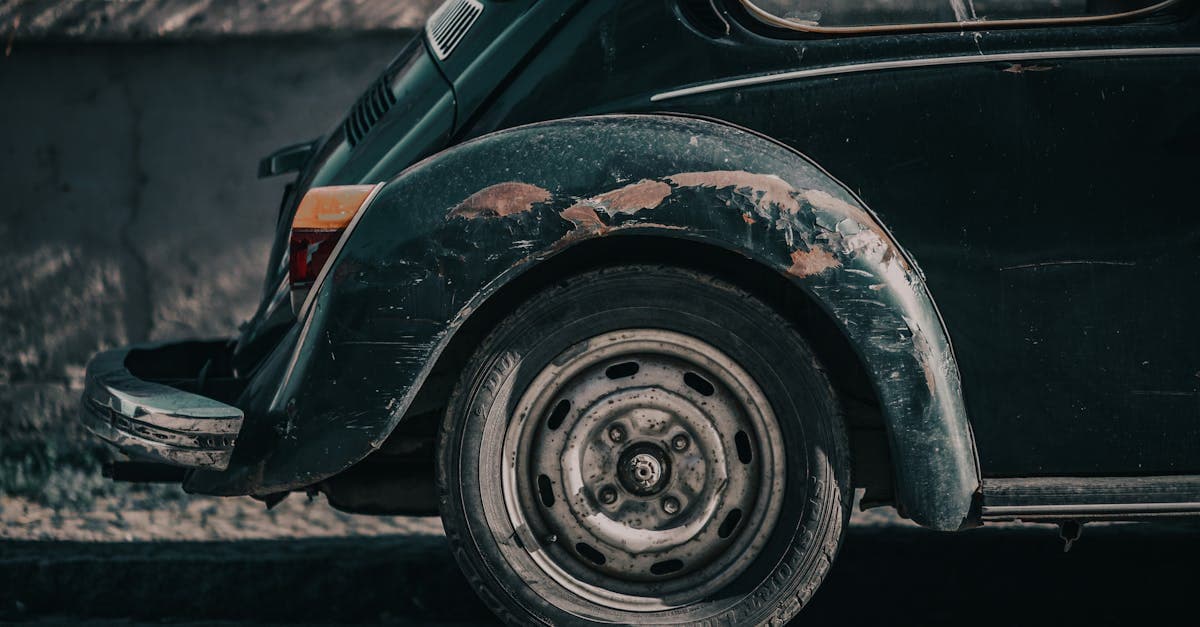
In my experience working with Florida policyholders, Property Damage Liability coverage generates some of the most painful surprises after an accident. Drivers who carried only the state minimum discover too late that $10,000 does not go far when modern vehicles need repair.
The most common conversation I have about PDL starts after the accident has already happened. A driver calls, shaken and worried, asking whether their insurance covers the damage to the other person's car. The answer is almost always yes — but the follow-up question is harder: does it cover enough? When the repair estimate exceeds the PDL limit, the conversation changes dramatically.
I have seen drivers face personal lawsuits over property damage gaps as small as $3,000 and as large as $50,000. In every case, the driver wished they had carried higher PDL limits. The premium difference between $10,000 and $50,000 or even $100,000 in PDL coverage is remarkably small — often less than $100 per year. Yet the financial protection that additional coverage provides can mean the difference between a manageable claim and a devastating personal liability.
This guide covers everything Florida drivers need to know about PDL — what it covers, what it excludes, how claims work, and how to choose the right limit. The goal is to help you make this decision before an accident forces you to live with it.
Florida PDL and Rental Vehicle Damage
Our investigation revealed something surprising. When you rent a vehicle in Florida, your personal PDL coverage may extend to damage you cause while driving the rental. Understanding how this works prevents you from buying unnecessary coverage at the rental counter while also ensuring you are not left without protection.
Personal policy extension: Most Florida auto insurance policies extend PDL coverage to rental vehicles operated by the policyholder. If you cause an accident while driving a rental car, your PDL pays for damage to other people's property just as it would if you were driving your own vehicle.
What rental counter coverage adds: The rental company offers liability coverage options at the counter. If your personal PDL already extends to rental vehicles, purchasing the rental company's liability coverage may be redundant. However, the rental company's coverage may offer higher limits than your personal PDL, which could be valuable.
Loss damage waiver distinction: The Loss Damage Waiver or Collision Damage Waiver offered at rental counters covers damage to the rental vehicle itself — not damage to other people's property. This is separate from PDL coverage. Your collision insurance, not your PDL, determines whether you need the LDW.
Gaps to watch for: Some personal policies limit rental vehicle coverage to vehicles of a certain value or type. Exotic cars, large trucks, and specialty vehicles may be excluded from your personal policy's rental extension. Read your policy or call your agent before declining rental counter coverage.
Out-of-state and international rentals: Your Florida PDL extends to rental vehicles in other states, but coverage may end at international borders. When renting outside the United States, purchasing the rental company's liability coverage is typically necessary because your personal policy does not extend internationally.
Florida PDL and Hit-and-Run Accidents
The records show a different story. Hit-and-run accidents present a unique challenge for Florida's PDL system because the at-fault driver's PDL coverage cannot be accessed without identifying the driver. Understanding the coverage implications helps victims and at-fault drivers alike.
When you are the victim: If a hit-and-run driver damages your property and cannot be identified, you cannot file a claim against their PDL because you do not know who they are or whether they have insurance. Your options are to file a claim under your own collision coverage and pay your deductible, or file under Uninsured Motorist Property Damage coverage if you carry it.
Florida's hit-and-run laws: Leaving the scene of an accident involving property damage in Florida is a second-degree misdemeanor punishable by up to 60 days in jail and a $500 fine. If the accident involves injury or death, the penalties are significantly more severe. These legal consequences exist independently of any insurance implications.
Your PDL after a hit-and-run you commit: If you leave the scene but are later identified, your PDL still covers the property damage you caused — assuming you have insurance. However, your insurer may investigate whether the hit-and-run constitutes a policy violation. Most policies require you to cooperate in the claims process, and fleeing the scene may complicate that obligation.
Reporting and documentation: If you are the victim of a hit-and-run, file a police report immediately. Note any details about the other vehicle — make, model, color, partial plate number. Check for nearby surveillance cameras that may have captured the incident. This information helps law enforcement identify the at-fault driver and allows you to access their PDL coverage.
Preventing hit-and-run financial damage: Carrying Uninsured Motorist Property Damage coverage is the best financial protection against hit-and-run property damage in Florida. This coverage pays for your vehicle damage when the at-fault driver cannot be identified or has no insurance.
The Dangerous Gaps in Florida PDL Coverage
Our investigation revealed something surprising. Florida's PDL coverage structure contains gaps that represent the incoming financial assault that follows every at-fault property damage accident in Florida for every driver on the road. Identifying these gaps is the first step toward closing them.
The limit gap: The most significant gap is the difference between your PDL limit and actual property damage costs. With the minimum at $10,000 and average claims exceeding $13,000, most minimum-coverage drivers face a gap on virtually any claim involving a newer vehicle.
The multi-vehicle gap: Your PDL limit applies to the total property damage from one accident, not per vehicle. If you cause a three-car pileup with $8,000 in damage to each vehicle — $24,000 total — your $10,000 PDL limit covers less than half. You are personally liable for $14,000.
The no-collision gap: Florida does not require collision coverage. Drivers carrying only PDL and PIP have no coverage for their own vehicle damage in any accident, regardless of fault. If another driver hits you and they are also underinsured, your own repairs come entirely out of pocket.
The no-BIL gap: Florida does not require Bodily Injury Liability coverage. If you cause an accident that injures someone seriously enough to exceed PIP coverage, you have no liability protection for their medical bills, lost wages, or pain and suffering. This gap can result in lawsuits for hundreds of thousands of dollars.
The uninsured motorist gap: Nearly one in five Florida drivers is uninsured or underinsured. If one of these drivers damages your property, their lack of coverage becomes your problem unless you carry Uninsured Motorist Property Damage coverage. Florida does not require this coverage, creating yet another gap.
Florida's $10,000 PDL Minimum and Why It Falls Short
Our investigation revealed something surprising. Florida requires every registered vehicle to carry at least $10,000 in Property Damage Liability coverage. This minimum represents the incoming financial assault that follows every at-fault property damage accident in Florida — a coverage floor that has not kept pace with the reality of modern vehicle costs.
How the minimum was set: Florida established its PDL minimum when the average vehicle cost a fraction of today's prices. At the time, $10,000 covered most property damage claims comfortably. Decades of vehicle price inflation have eroded that coverage to the point where it covers barely half of an average property damage claim.
Average claim costs today: The Insurance Information Institute reports average property damage claims exceeding $13,000 nationally. In Florida, where luxury vehicles and expensive commercial traffic are common, typical claims frequently surpass $15,000 to $20,000. A $10,000 limit leaves the at-fault driver exposed for the balance.
Modern vehicle repair costs: Even a moderate rear-end collision involving a vehicle with sensors, cameras, and adaptive cruise control components can produce a repair bill of $8,000 to $15,000. A bumper replacement on a vehicle with parking sensors alone can cost $3,000 to $5,000. The technology that makes modern vehicles safer also makes them expensive to repair.
The exposure gap: When property damage exceeds your PDL limit, you are personally responsible for the difference. The damaged party can pursue you through civil court for the amount your insurance did not cover. This means a $10,000 PDL limit exposes your savings, wages, and other assets to a lawsuit for any property damage above that amount.
National comparison: Florida's $10,000 PDL minimum ranks among the lowest in the country. Many states require $25,000 or more in property damage liability. Florida drivers who carry only the minimum are significantly less protected than drivers in most other states.
Florida PDL and Government Property Damage
The records show a different story. When your vehicle damages government-owned property in Florida, the PDL claim follows specific procedures and often involves costs that surprise drivers. Government property is expensive, and the entities that own it have established processes for recovering repair costs.
Traffic signals and lights: A single traffic signal intersection can cost $150,000 to $500,000 to install. Even damaging one signal head and its pole can cost $15,000 to $30,000 to repair. If your PDL limit is the state minimum, a single traffic signal claim can exhaust your coverage and still leave a substantial balance.
Guardrails and barriers: Florida's Department of Transportation bills drivers for guardrail damage based on actual replacement costs plus labor. A standard W-beam guardrail section costs $25 to $35 per linear foot plus posts and installation. A significant guardrail impact involving 100 feet of rail can cost $10,000 or more.
Street signs and signals: Stop signs, speed limit signs, directional signs, and their posts all carry replacement costs. While individual signs are relatively inexpensive, the posts, foundations, and labor add up. A cluster of signs at an intersection can cost $2,000 to $5,000 to replace.
Utility poles: Hitting a utility pole in Florida triggers claims from the pole owner — usually a utility company — for the pole, wiring, transformers, and any service disruption costs. A single wooden utility pole replacement costs $3,000 to $6,000, but if a transformer is mounted on it, the total can reach $20,000 or more.
Government billing process: Government entities send property damage bills directly to your insurer. If the bill exceeds your PDL limit, the government entity can pursue you personally for the remainder. Government agencies are typically persistent in recovering these costs.
Florida PDL Coverage for Damage to Parked Vehicles
Our investigation revealed something surprising. Hitting a parked car is one of the most common property damage scenarios in Florida, particularly in crowded parking lots, residential streets, and commercial areas. Understanding how PDL applies to these situations helps you handle them correctly.
Automatic fault determination: In virtually all cases where a moving vehicle strikes a parked vehicle, the moving vehicle's driver is at fault. There is no comparative negligence argument when the other vehicle was legally parked and unoccupied. Your PDL pays the full repair cost up to your policy limit.
Florida's obligations after hitting a parked car: Florida law requires you to locate the owner and exchange information, or leave a written notice with your name, address, and vehicle information if the owner cannot be found. Leaving the scene without providing this information constitutes a hit-and-run, which is a criminal offense.
Common parking lot scenarios: Door dings that cause visible damage, backing into a parked vehicle, misjudging a parking space and scraping an adjacent vehicle, and shopping cart-caused damage are all common parking lot claims. For damage you caused with your vehicle, PDL applies. Shopping cart damage is typically not a PDL claim since it does not involve your vehicle's operation.
The deductible-free advantage for the parked car owner: When your PDL pays for damage to a parked vehicle, the vehicle owner receives the full repair amount without paying their own deductible. This is because the claim is filed against your PDL, not against their collision coverage. The owner has no out-of-pocket expense.
Rate impact of parking lot claims: Even though parking lot collisions are typically low-speed, the resulting PDL claim is an at-fault accident on your record. It will likely increase your premium at renewal. For very minor damage, some drivers choose to pay out of pocket to avoid the claim, though this requires agreement from the other party.
Florida PDL vs PIP: Two Required Coverages, Two Different Jobs
The records show a different story. Florida requires exactly two auto insurance coverages: PDL and PIP. Understanding how they differ is fortifying your coverage position so no property damage claim can breach your financial perimeter — these coverages protect entirely different things, and confusing them can lead to dangerous gaps in your financial protection.
What PIP covers: Personal Injury Protection covers your own medical expenses and lost wages after an accident, regardless of who was at fault. Florida requires $10,000 in PIP coverage. It pays 80 percent of medical bills and 60 percent of lost wages up to the policy limit.
What PDL covers: Property Damage Liability covers damage you cause to other people's property when you are at fault. It does not cover your injuries, your vehicle, or the other person's injuries — only their property damage.
The no-fault connection: Florida is a no-fault state for personal injuries, meaning your PIP pays for your own injuries regardless of fault. But property damage follows at-fault rules — the person who caused the accident is responsible for property damage, and their PDL pays for it. This dual system is unique and confusing.
What is missing from Florida's requirements: Unlike most states, Florida does not require Bodily Injury Liability coverage or collision coverage. This means a driver carrying only the two required coverages has no protection for injuries they cause to others and no coverage for damage to their own vehicle.
Building complete protection: PIP and PDL are the foundation, not the complete structure. Adding Bodily Injury Liability, collision, comprehensive, and uninsured motorist coverage builds the comprehensive protection that Florida's minimum requirements do not provide. Understanding what the two required coverages do and do not cover is the first step toward building adequate protection.
Making Florida PDL Coverage Work for You
In my experience, the Florida drivers who best protect their finances are the ones who understand PDL before they need it. They know their limit, they know what it covers, and they have made a deliberate decision about whether that limit is adequate for their situation.
The worst time to learn about PDL coverage is after you have caused an accident and the property damage bill exceeds your limit. The best time is now — before anything happens — when you can review your coverage, compare the cost of higher limits, and make an informed decision without the pressure of an active claim.
Take the time to review your declarations page today. Check your PDL limit. Use the information in this guide to evaluate whether that limit matches your actual exposure. If it does not, the fix is a phone call or a few clicks away, and the cost is almost certainly less than you expect.
Your financial security should not depend on never causing an accident. It should depend on having enough coverage to handle one. Florida PDL provides that coverage — but only if your limit is adequate for the damage modern accidents produce.
Continue reading

What Insurance Agents Wish You Knew About Comparing Quotes
Insurance professionals see policyholders make the same comparison mistakes repeatedly. Learning what agents wish consumers understood transforms quote shopping from a price hunt into a value analysis.
Policy Checkup After Getting Married: What Coverage Changes You Need
Marriage affects auto insurance, homeowners coverage, life insurance, and liability protection. Reviewing all your policies after getting married ensures both spouses are properly covered.
AOB Agreements and Your Rights as an Insurance Policyholder
You have the right to accept or refuse an assignment of benefits. Knowing your rights before a contractor asks you to sign helps you maintain control of your insurance claim.