Why Florida Does Not Require Bodily Injury Liability Insurance

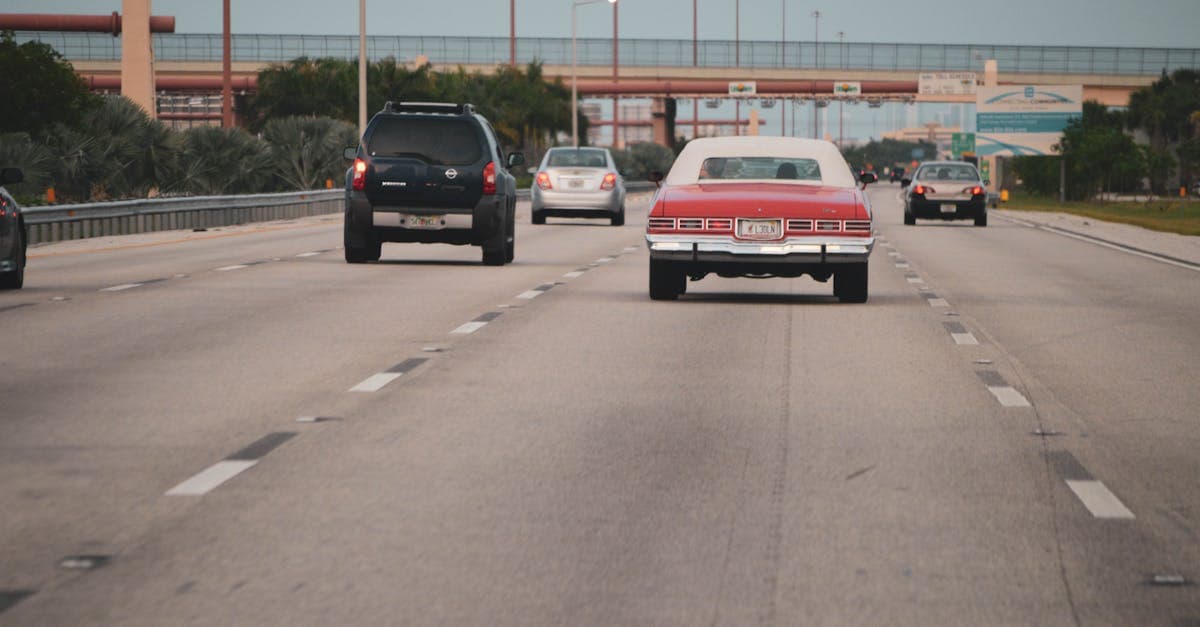
In my experience working with Florida drivers, the conversation about minimum insurance almost always starts the same way: someone wants to know the cheapest legal coverage they can carry. That is an understandable question in a state with some of the highest insurance premiums in the nation. But the answer requires context that too many drivers never receive.
Yes, Florida's minimum is just PIP and property damage liability at $10,000 each. Yes, that is technically enough to register your vehicle and drive legally. But I have worked with too many drivers who carried only minimums and then caused an accident that changed their financial lives forever. A young driver who rear-ended a family at a stoplight. A retiree who ran a stop sign and sent a cyclist to the hospital. In each case, the minimum coverage was exhausted instantly, and the driver's personal assets were on the line.
The hardest conversations happen after the accident, when a driver discovers that the $10,000 PIP limit barely covered the emergency room visit, that they have no bodily injury coverage to protect their savings account, and that the injured party's attorney is already preparing a lawsuit.
These experiences have shaped my perspective on Florida minimum insurance. I believe every driver deserves to understand not just what the state requires, but what happens when those minimums are all you have during a real accident. This guide provides that complete picture, combining the legal requirements with the practical realities of driving in Florida.
Florida Insurance Requirements for New Residents
Our investigation revealed something surprising. Moving to Florida means adapting your auto insurance to meet the state's unique requirements. The process has strict deadlines and involves coverages that many other states do not require. Understanding the transition process prevents gaps, penalties, and compliance issues.
The 30-day deadline: Florida law requires new residents to register their vehicles and obtain Florida insurance within 30 days of either establishing residency, registering a vehicle, or accepting employment. Driving beyond this window with out-of-state insurance risks penalties for non-compliance with Florida's insurance requirements.
PIP coverage requirement: Most states do not require personal injury protection, so your out-of-state policy likely does not include it. You must add PIP coverage to meet Florida's minimum requirements. Contact your current insurer to add PIP or switch to a Florida-based policy that includes it. Many national carriers can convert your policy to Florida coverage without changing companies.
Adjusting liability coverage: If your current policy includes bodily injury liability from your prior state, you can maintain it on your Florida policy even though Florida does not require it. This is strongly recommended because your prior state likely required it for good reason. Dropping BIL just because Florida does not mandate it would reduce your protection.
Vehicle registration requirements: Florida requires proof of Florida-compliant insurance — specifically PIP and PDL coverage — before you can register your vehicle. Bring your insurance declarations page or digital proof of coverage to the county tax collector's office when registering. The insurance must show Florida as the garaging state.
Comparing costs: Florida insurance premiums are typically higher than most other states, which surprises many new residents. Request quotes from multiple carriers before moving, and factor the increased insurance cost into your relocation budget. Bundling home and auto insurance, maintaining a clean driving record, and taking advantage of available discounts help manage the higher premiums.
Stacked vs Unstacked Uninsured Motorist Coverage in Florida
The records show a different story. Florida offers a unique option that can dramatically increase your uninsured motorist protection: stacking. Understanding stacked versus unstacked coverage is fortifying well beyond the minimum perimeter to defend against Florida's full spectrum of driving threats for multi-vehicle households.
Stacked coverage explained: Stacking allows you to multiply your UM coverage limits by the number of vehicles on your policy. If you carry $100,000 in UM coverage and have three vehicles on your policy, stacked coverage gives you $300,000 in available UM protection for a single claim. This applies regardless of which vehicle was involved in the accident.
Unstacked coverage explained: Unstacked UM coverage limits your protection to the per-vehicle amount regardless of how many vehicles are on your policy. With $100,000 unstacked UM and three vehicles, your maximum UM benefit is $100,000 per claim — the same as if you had one vehicle.
The cost difference: Stacked coverage costs more than unstacked — typically 20 to 40 percent more for the UM portion of your premium. However, the effective coverage increase is proportional to the number of vehicles, making stacking a highly cost-effective way to increase UM limits for multi-vehicle households.
When stacking makes sense: Stacking is particularly valuable in Florida because of the state's high uninsured motorist rate. If you have two or more vehicles on your policy and are concerned about uninsured driver risk, stacking provides a significant protection increase at a relatively modest additional cost. Families with teenage drivers benefit especially because the increased UM limits apply to any household member's accident.
How to elect stacking: Florida insurers must offer stacked UM coverage, but they are not required to recommend it. When purchasing or renewing your policy, specifically ask about stacked UM coverage and compare the premium difference to the coverage increase. Many drivers discover that stacking was available but never offered during their initial policy purchase.
Florida's Financial Responsibility Law Explained
The records show a different story. Florida's financial responsibility law creates a second tier of insurance requirements that kick in after certain driving events. While the standard minimum is just PIP and PDL, the financial responsibility law requires additional coverage under specific circumstances that every driver should understand.
What triggers the law: The financial responsibility law is triggered by at-fault accidents involving bodily injury or death, DUI convictions, driving with a suspended or revoked license, and certain other serious traffic violations. Once triggered, you must prove you can cover future liability through insurance, bond, or other financial instruments.
Required coverage under the law: When the financial responsibility law applies, you must carry bodily injury liability of at least $10,000 per person and $20,000 per accident in addition to the standard PIP and PDL. You must also maintain property damage liability of at least $10,000. These requirements must be maintained for three years from the triggering event.
SR-22 filing requirement: To prove compliance, your insurer files an SR-22 certificate with the Florida Department of Highway Safety and Motor Vehicles. This certificate confirms that you carry the required coverage. If your coverage lapses for any reason, the insurer notifies the state and your license is suspended.
The cost impact: SR-22 requirements significantly increase your insurance costs. Not only do you need additional coverage (bodily injury liability), but the underlying reason for the SR-22 — a DUI, at-fault injury accident, or serious violation — also increases your base premium. Many Florida drivers see their insurance costs double or triple under an SR-22 requirement.
The irony of the system: The financial responsibility law essentially proves that Florida recognizes the need for bodily injury liability coverage — but only requires it after a driver has demonstrated the danger of not having it. This retroactive approach means the first serious at-fault accident occurs without BIL coverage, potentially devastating both the at-fault driver and the victim.
Florida's $10,000 Property Damage Liability Requirement
Our investigation revealed something surprising. The second mandatory coverage in Florida is property damage liability with a minimum limit of $10,000. This coverage pays for damage you cause to other people's property — primarily their vehicles — when you are at fault in an accident. The limit represents the flanking maneuvers that overwhelm drivers whose defenses stop at Florida's minimum line because it has not been updated in decades.
What PDL covers: Property damage liability pays to repair or replace vehicles you damage in an at-fault accident. It also covers damage to other property such as fences, mailboxes, buildings, and guardrails. The $10,000 limit is the maximum your insurer will pay per accident for all property damage combined.
Why $10,000 is dangerously low: The average cost of vehicle repairs after an accident has increased significantly in recent years. A moderate rear-end collision with a late-model vehicle can easily generate $8,000 to $15,000 in repair costs. If you total someone's vehicle worth $30,000, your $10,000 PDL limit leaves you personally responsible for the remaining $20,000.
Multi-vehicle accidents: In a chain reaction or multi-vehicle accident, the $10,000 limit must cover damage to all vehicles and property combined. Three vehicles damaged at $5,000 each means $15,000 in damage — and your $10,000 limit leaves $5,000 for you to pay out of pocket.
The lawsuit risk: When your property damage liability limit is exhausted, the damaged party can sue you for the difference. This means your personal assets — savings, real property, and future wages — are exposed to legal claims. Increasing your PDL limit is one of the least expensive and most impactful coverage upgrades a Florida driver can make.
Recommended PDL limits: Insurance experts recommend at least $50,000 to $100,000 in property damage liability for Florida drivers. The premium difference between $10,000 and $50,000 is often surprisingly modest — sometimes just $50 to $100 per year — making this one of the best value upgrades available.
Choosing the Right PIP Deductible in Florida
The records show a different story. Florida PIP policies offer deductible options that directly affect both your premium and your out-of-pocket costs after an accident. Understanding these options helps you make a strategic choice rather than accepting the default.
Available deductible options: Florida PIP deductibles are typically offered at $0, $250, $500, and $1,000. The deductible is the amount you pay out of pocket before PIP begins covering your medical expenses. Higher deductibles reduce your premium but increase your initial financial exposure after an accident.
How the deductible works with PIP: Your PIP deductible applies before the 80 percent coverage calculation. With a $500 deductible and a $2,000 medical bill, you pay the first $500, and PIP covers 80 percent of the remaining $1,500 ($1,200). Your total out-of-pocket cost is $800 (the $500 deductible plus $300 in coinsurance). Without a deductible, PIP covers 80 percent of the full $2,000 ($1,600), and you pay only $400 in coinsurance.
Premium savings by deductible level: Moving from a $0 deductible to a $500 deductible can reduce your PIP premium by 20 to 30 percent. The $1,000 deductible saves even more but creates significant upfront exposure. Given that PIP's maximum benefit is only $10,000, a $1,000 deductible means you are absorbing a large portion of the already-limited coverage out of pocket.
The strategic calculation: If your PIP premium savings from choosing a $500 deductible is $200 per year, you break even in 2.5 years without a claim. For drivers with health insurance that can cover accident-related medical expenses, a higher PIP deductible may be strategically sound because health insurance becomes the secondary payer after PIP.
Coordination with health insurance: Florida law allows PIP to coordinate with health insurance, and this coordination affects the optimal deductible choice. If you have robust health insurance, a higher PIP deductible reduces your premium while your health insurance covers costs that PIP does not. Without health insurance, a lower PIP deductible provides critical first-dollar medical coverage.
How Florida's Requirements Compare to Other States
Our investigation revealed something surprising. Comparing Florida's minimum insurance requirements to other states reveals just how unusual and minimal Florida's system is. This comparison provides important context for understanding what you are and are not getting with Florida's minimums.
The bodily injury gap: Most states require bodily injury liability as part of their minimum insurance. The national standard ranges from 15/30 in some states to 50/100 in others. Florida and New Hampshire are the only two states that do not require BIL coverage for standard registration. This means Florida drivers have less mandatory protection for accident victims than drivers in 48 other states.
PIP vs traditional tort states: Approximately a dozen states use some form of no-fault or PIP system, but Florida's version is among the most limited. Michigan, for example, formerly offered unlimited PIP medical benefits. New York requires $50,000 in PIP. Florida's $10,000 PIP limit is at the bottom of no-fault states in terms of benefit generosity.
Property damage liability comparison: Florida's $10,000 PDL minimum matches only a handful of other states at the lowest tier. Many states require $25,000 or more in property damage liability, reflecting the actual cost of vehicle damage in modern accidents. Florida's $10,000 has not kept pace with vehicle values or repair costs.
Combined minimum coverage comparison: When you add up all mandatory coverage, Florida's total required limits are among the lowest in the nation. States like Maine (50/100/25), Alaska (50/100/25), and many others require significantly more coverage, providing better protection for both policyholders and accident victims.
What the comparison means for you: Driving in Florida with only state minimums means carrying less protection than drivers in almost every other state are required to carry. If you would be uncomfortable driving in Texas, Ohio, or New York with only the insurance Florida requires, that discomfort is well-founded — those states require more insurance because they recognize that higher minimums better protect everyone on the road.
Florida's $10,000 Property Damage Liability Requirement
Our investigation revealed something surprising. The second mandatory coverage in Florida is property damage liability with a minimum limit of $10,000. This coverage pays for damage you cause to other people's property — primarily their vehicles — when you are at fault in an accident. The limit represents the flanking maneuvers that overwhelm drivers whose defenses stop at Florida's minimum line because it has not been updated in decades.
What PDL covers: Property damage liability pays to repair or replace vehicles you damage in an at-fault accident. It also covers damage to other property such as fences, mailboxes, buildings, and guardrails. The $10,000 limit is the maximum your insurer will pay per accident for all property damage combined.
Why $10,000 is dangerously low: The average cost of vehicle repairs after an accident has increased significantly in recent years. A moderate rear-end collision with a late-model vehicle can easily generate $8,000 to $15,000 in repair costs. If you total someone's vehicle worth $30,000, your $10,000 PDL limit leaves you personally responsible for the remaining $20,000.
Multi-vehicle accidents: In a chain reaction or multi-vehicle accident, the $10,000 limit must cover damage to all vehicles and property combined. Three vehicles damaged at $5,000 each means $15,000 in damage — and your $10,000 limit leaves $5,000 for you to pay out of pocket.
The lawsuit risk: When your property damage liability limit is exhausted, the damaged party can sue you for the difference. This means your personal assets — savings, real property, and future wages — are exposed to legal claims. Increasing your PDL limit is one of the least expensive and most impactful coverage upgrades a Florida driver can make.
Recommended PDL limits: Insurance experts recommend at least $50,000 to $100,000 in property damage liability for Florida drivers. The premium difference between $10,000 and $50,000 is often surprisingly modest — sometimes just $50 to $100 per year — making this one of the best value upgrades available.
Making Florida Insurance Work for Your Situation
In my experience, the Florida drivers who fare best are the ones who understand their requirements before they need to use their coverage. They know what PIP covers and what it does not. They understand why bodily injury liability matters even though Florida does not require it. And they have made deliberate, informed decisions about every coverage on their policy.
The worst time to learn about Florida insurance is after an accident when you are staring at medical bills that exceed your PIP limit and discovering that you have no bodily injury coverage to protect your savings. The best time is now — before anything happens — when you can evaluate your options, compare quotes, and build coverage that actually protects your financial life.
Take the time to review your declarations page today. Compare your current coverage to the recommended levels discussed in this guide. Get quotes for the coverage you are missing. These steps take less than an hour and can prevent financial devastation that lasts years.
Florida's roads carry unique risks, and the state's insurance requirements address only a fraction of them. Your job as a Florida driver is to close the gap between what the state requires and what your financial situation demands. Start today.
Continue reading

What Insurance Agents Wish You Knew About Comparing Quotes
Insurance professionals see policyholders make the same comparison mistakes repeatedly. Learning what agents wish consumers understood transforms quote shopping from a price hunt into a value analysis.
Policy Checkup After Getting Married: What Coverage Changes You Need
Marriage affects auto insurance, homeowners coverage, life insurance, and liability protection. Reviewing all your policies after getting married ensures both spouses are properly covered.

AOB Agreements and Your Rights as an Insurance Policyholder
You have the right to accept or refuse an assignment of benefits. Knowing your rights before a contractor asks you to sign helps you maintain control of your insurance claim.