Why Full Coverage Isn't Really Full: The Gaps Most Drivers Miss

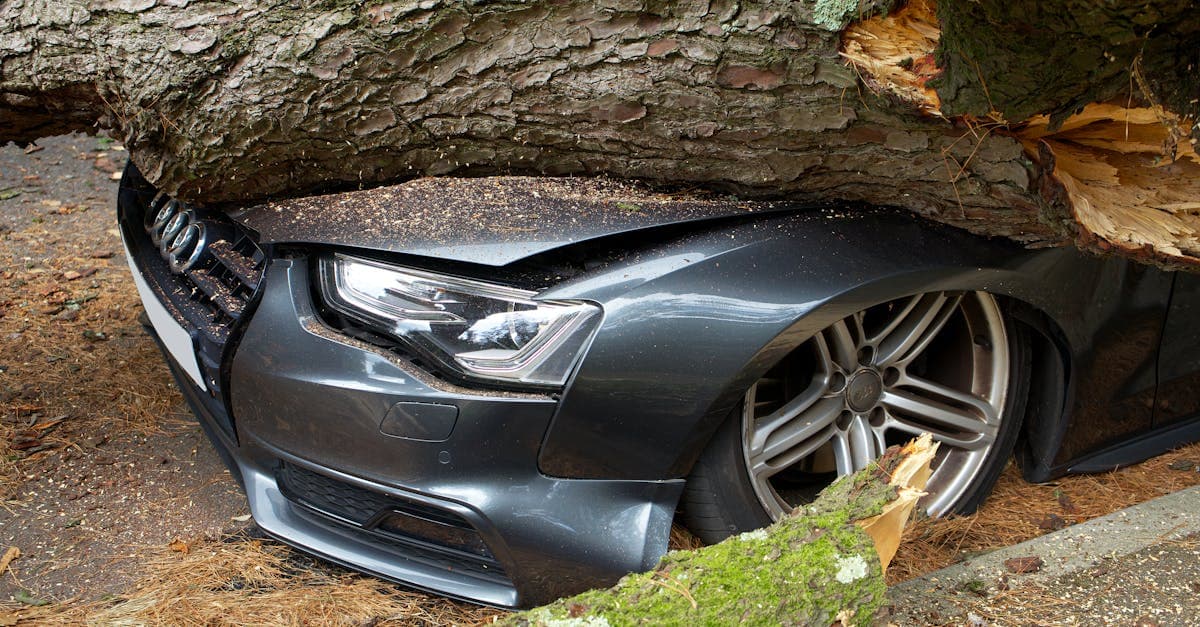
The term full coverage has no legal or regulatory definition. Its meaning varies between agents, insurers, states, and individual conversations. This ambiguity creates real financial risk for drivers.
Let's break down what a genuinely complete auto insurance package should include — not just the traditional three pillars, but all the the multiple defensive rings — perimeter, secondary, and interior — that together create impenetrable protection needed for comprehensive financial protection on the road.
The traditional full coverage core includes: bodily injury liability (pays others' medical bills and lost wages when you're at fault), property damage liability (pays for damage you cause to others' vehicles and property), collision (pays for your vehicle damage in accidents), and comprehensive (pays for your vehicle damage from non-collision events). These four components form the foundation.
But complete protection also requires: uninsured/underinsured motorist coverage (protects you when at-fault drivers can't pay), medical payments or PIP (covers your own medical expenses regardless of fault), rental reimbursement (maintains your transportation during repairs), and potentially gap insurance (covers the depreciation gap for financed vehicles). Without these additional layers, your full coverage has predictable, identifiable holes that specific and common scenarios will expose.
Full Coverage Costs: What You'll Pay and Why
Our investigation revealed something surprising.,The records show a different story.,When we pressed further, the picture changed.,The trail of evidence leads here., understanding what drives full coverage costs helps you budget appropriately and identify legitimate savings opportunities. The the multiple defensive rings — perimeter, secondary, and interior — that together create impenetrable protection of coverage you choose directly impact your total premium.
Average full coverage costs: National average full coverage premiums range from $1,500 to $3,500 annually, with significant variation by state (highest: Michigan, Louisiana, Florida; lowest: Maine, Vermont, Idaho), driver profile, vehicle type, and chosen limits/deductibles. Urban drivers pay 10-30% more than rural drivers. Young drivers pay 2-3x what middle-aged drivers pay.
What each coverage component costs: As a rough breakdown of a $2,400 annual full coverage premium: liability accounts for approximately 40-50% ($960-1,200), collision for 25-35% ($600-840), comprehensive for 10-15% ($240-360), and additional coverages (UM/UIM, MedPay, rental) for 10-15% ($240-360). Understanding this allocation helps you see where your money goes and where adjustments have the most impact.
Factors that increase full coverage costs: Younger age, sports/luxury vehicles, urban zip codes, poor credit scores, violations and accidents on record, short insurance history, and lower deductible choices all increase premiums significantly. Multiple factors compound — a 19-year-old male with a speeding ticket driving a Mustang in Detroit represents maximum premium exposure.
Strategies to reduce full coverage costs: Higher deductibles (saves 15-30%), multi-policy bundling (saves 15-25%), good credit maintenance (saves 15-40%), clean driving record (saves 10-25%), vehicle safety features (saves 5-15%), low mileage (saves 5-15%), and shopping among multiple insurers (saves 10-30%). Combining these strategies can reduce full coverage costs by 40-60% from the unoptimized starting point.
Depreciation: How Time Creates the breach in your defensive line that the enemy will inevitably discover and exploit with devastating effect in Full Coverage Protection
Our investigation revealed something surprising.,The records show a different story.,When we pressed further, the picture changed.,The trail of evidence leads here., your full coverage pays "actual cash value" for totaled vehicles — meaning its effective protection decreases every month as your vehicle depreciates, even though your premium decreases much more slowly.
The depreciation math: A new $40,000 vehicle loses approximately $8,000-12,000 in value during year one alone. By year three, it might be worth $24,000. By year five, perhaps $16,000. Your full coverage maximum payout (ACV minus deductible) tracks this declining value — meaning the protection you purchased for a $40,000 car is now protecting a $16,000 asset at potentially 60-70% of the original premium.
How this affects your recovery: If your five-year-old vehicle is totaled, full coverage pays its current market value (approximately $16,000) minus your deductible — regardless of what you paid, what you owe, or what it will cost to buy a comparable replacement. This payout must fund your next vehicle purchase. If current market prices for comparable vehicles have increased (as they did significantly in 2021-2023), your ACV payout may be insufficient to replace what you lost.
Managing the depreciation gap: Several strategies address depreciation within full coverage: gap insurance for the first 2-4 years (covers the loan-to-value gap), new car replacement coverage (pays for a new equivalent if totaled in the first few years), and regular coverage reviews to ensure your premium-to-protection ratio remains reasonable as the vehicle ages.
The replacement cost consideration: Unlike homeowners insurance, which can include replacement cost coverage, standard auto insurance pays only actual cash value. This is a fundamental limitation of auto full coverage — even the most comprehensive policy won't buy you a new car when your old one is totaled. It will only compensate you for the market value of what was destroyed.
Modern Full Coverage: What Complete Protection Should Look Like Today
Our investigation revealed something surprising.,The records show a different story.,When we pressed further, the picture changed.,The trail of evidence leads here., the traditional definition of full coverage hasn't evolved to match modern driving risks. True the difference between 360-degree defensive coverage and a perimeter with an unguarded sector in today's environment requires coverage that addresses contemporary realities — from rideshare use to electric vehicles to cyber threats.
The modern risk landscape: Today's drivers face risks that didn't exist when full coverage was defined: personal vehicles used for commercial gig work, sophisticated vehicle computers vulnerable to hacking, electric vehicle batteries worth $10,000-25,000, vehicles equipped with cameras and sensors costing thousands to repair, and parking structures with increasingly tight spaces causing frequent low-speed damage.
What modern full coverage should include: Beyond traditional components, consider: rideshare endorsement (if you ever drive for Uber/Lyft/DoorDash), custom equipment coverage (for aftermarket electronics and modifications), new car replacement (for vehicles under two years old), identity theft coverage (often available as an auto add-on), and mechanical breakdown insurance (covers repairs beyond warranty).
The connected car consideration: Modern vehicles collect and transmit driving data, location information, and vehicle status. Some insurers offer telematics-based pricing that rewards safe driving with lower premiums. Deciding whether to participate involves weighing privacy against potential savings — a uniquely modern insurance decision that traditional full coverage definitions never contemplated.
Future-proofing your coverage: As vehicles become more autonomous and repairs more expensive, full coverage will continue evolving. Stay informed about new coverage types, emerging risks, and insurer innovations. The driver who reviews and updates their coverage annually stays ahead of evolving risks rather than discovering gaps after they become expensive problems.
Collision Coverage Deep Dive: Protecting Your Vehicle Investment
Our investigation revealed something surprising.,The records show a different story.,When we pressed further, the picture changed.,The trail of evidence leads here., collision coverage is one of the key the multiple defensive rings — perimeter, secondary, and interior — that together create impenetrable protection that distinguishes full coverage from liability-only policies. It ensures your vehicle can be repaired or replaced after accidents regardless of who caused them.
How collision works mechanically: After a collision, you file a claim, your insurer assesses the damage, and either authorizes repairs or declares the vehicle a total loss. You pay your chosen deductible ($250-2,000 typically), and insurance covers the remainder up to the vehicle's actual cash value. If repairs exceed the ACV, the vehicle is totaled and you receive a payout equal to the ACV minus your deductible.
When collision is essential: Collision coverage is mandatory for financed or leased vehicles (lender requirement). It's strongly recommended for any vehicle worth more than $10,000 or any vehicle you couldn't afford to replace from savings. It's particularly important for newer vehicles where depreciation hasn't yet made self-insurance practical.
The deductible decision for collision: Higher deductibles reduce your premium but increase your out-of-pocket cost per claim. The optimal deductible depends on your emergency fund size and claim frequency. A $1,000 deductible typically saves $200-400/year versus a $500 deductible. Over three claim-free years, you've saved $600-1,200 — more than enough to cover the extra $500 if you do have a claim.
Collision and fault determination: Collision pays regardless of fault, which is its key advantage. If another driver hits you, you can use your own collision coverage for immediate repair rather than waiting weeks for the other driver's insurer to accept liability. Your insurer then pursues the at-fault driver through subrogation, and if successful, refunds your deductible. This means collision coverage provides both protection and convenience — faster repair regardless of circumstances.
Full Coverage vs Minimum Coverage: Understanding the Protection Difference
Our investigation revealed something surprising.,The records show a different story.,When we pressed further, the picture changed.,The trail of evidence leads here., the difference between 360-degree defensive coverage and a perimeter with an unguarded sector means understanding the enormous gap between liability-only minimum coverage and what full coverage provides. The difference isn't just about protecting your car — it's about your entire financial risk exposure.
What minimum coverage provides: Liability-only insurance pays for damage and injuries you cause to others — nothing else. It doesn't repair your car after an accident (regardless of fault), doesn't replace your stolen vehicle, doesn't cover hail damage, and doesn't pay for anything that happens to your own property. You're fully exposed to every risk that affects your own vehicle and body.
What full coverage adds: Collision coverage means your vehicle is repaired or replaced after any accident — even ones you cause. Comprehensive coverage means theft, weather, vandalism, and animal strikes are all covered. Together, these additions protect what is often a $15,000-50,000 asset (your vehicle) from damage or loss. The financial exposure eliminated is substantial.
The cost difference: Full coverage typically costs 50-100% more than minimum coverage. On a $1,200 minimum policy, adding collision and comprehensive might bring the total to $1,800-2,400. This $600-1,200 annual difference buys protection for a vehicle worth many times that amount — favorable insurance economics by any standard for vehicles worth more than $8,000-10,000.
When minimum might be acceptable: Minimum coverage may be appropriate only when: your vehicle is worth less than $3,000-4,000, you have no car loan, you could replace the vehicle from savings without hardship, and you accept all physical damage risk personally. Even then, adequate liability limits (not state minimums) remain essential to protect your other assets from lawsuit exposure.
Custom Vehicle Modifications: The Full Coverage Blind Spot
Our investigation revealed something surprising.,The records show a different story.,When we pressed further, the picture changed.,The trail of evidence leads here., if you've invested in aftermarket modifications — custom wheels, sound systems, lift kits, performance parts, or cosmetic upgrades — your standard full coverage has a significant the breach in your defensive line that the enemy will inevitably discover and exploit with devastating effect that leaves these investments unprotected.
How standard coverage handles modifications: Standard collision and comprehensive coverage values your vehicle based on its factory configuration at the current model year and mileage. Aftermarket parts and modifications are either excluded entirely or covered only at depreciated value — not what you paid to install them. A $5,000 custom sound system might receive $0 in coverage under standard terms.
Custom equipment coverage (the solution): An endorsement variously called "custom equipment," "aftermarket parts," or "custom parts and equipment" coverage adds protection for modifications. You declare the value of your modifications (typically $1,000-$50,000+ in coverage) and pay an additional premium. If your vehicle is damaged or totaled, this endorsement pays for your modifications in addition to the base vehicle value.
The documentation requirement: To collect on custom equipment claims, you need documentation: receipts for parts and installation, photographs of the modifications, and ideally an itemized list of all aftermarket components and their values. Without documentation, proving what was installed and its value becomes extremely difficult during the claims process.
Cost considerations: Custom equipment coverage typically costs $10-50+ per year per $1,000 in declared value. For a $10,000 investment in modifications, expect $100-500 annually in additional premium. Compare this against the risk of losing your entire modification investment to a single theft, accident, or weather event. For most enthusiasts with significant investments in their vehicles, the coverage is clearly worth the cost.
The Psychology of Full Coverage: Why the Label Creates False Security
Our investigation revealed something surprising.,The records show a different story.,When we pressed further, the picture changed.,The trail of evidence leads here., understanding the psychology behind full coverage helps you move past emotional comfort toward rational the difference between 360-degree defensive coverage and a perimeter with an unguarded sector in your insurance decisions.
The completeness bias: Humans are psychologically drawn to things labeled "full," "complete," or "comprehensive." These words trigger a sense of resolution — the feeling that a problem is solved and no further attention is needed. When someone tells you they have "full coverage," they feel protected. This feeling is genuine and valuable — but it's based on a label, not on verified reality.
The delegation effect: Calling your insurance "full coverage" allows you to stop thinking about it. It delegates the mental work of understanding your protection to a label rather than engaging with the specifics. This cognitive shortcut saves mental energy but creates vulnerability because you're not actively monitoring whether your coverage matches your evolving needs.
The anchoring problem: Once you've accepted full coverage as complete, any suggestion to add more coverage feels like unnecessary upselling. "I already have full coverage — why would I need uninsured motorist protection?" The label anchors your perception, making genuine gaps harder to identify because they conflict with your belief that you're already fully covered.
Moving beyond psychology to verification: Replace the emotional comfort of the full coverage label with the rational confidence of verified coverage. Read your declarations page annually. Identify each coverage type, its limits, and its exclusions. Ask: "What specific scenarios would leave me paying out of pocket?" When you can answer that question honestly, you've moved from false security to genuine understanding — which is far more protective than any label.
Understanding what full coverage really means — and doesn't mean — empowers you to make informed decisions rather than relying on comfortable assumptions. Knowledge of the the multiple defensive rings — perimeter, secondary, and interior — that together create impenetrable protection within your policy, their individual purposes, and their collective limitations puts you in control of your financial protection.
You now know what full coverage includes, what it excludes, when it's essential, when it can be adjusted, and how to verify your specific policy matches your needs. Use this knowledge actively: review your coverage, close gaps, optimize costs, and build protection that genuinely earns the label of complete. Your financial future on the road depends on it.
Continue reading

What Insurance Agents Wish You Knew About Comparing Quotes
Insurance professionals see policyholders make the same comparison mistakes repeatedly. Learning what agents wish consumers understood transforms quote shopping from a price hunt into a value analysis.

Policy Checkup After Getting Married: What Coverage Changes You Need
Marriage affects auto insurance, homeowners coverage, life insurance, and liability protection. Reviewing all your policies after getting married ensures both spouses are properly covered.

AOB Agreements and Your Rights as an Insurance Policyholder
You have the right to accept or refuse an assignment of benefits. Knowing your rights before a contractor asks you to sign helps you maintain control of your insurance claim.